cordon bleu

Bye Bye Puff Pastry


Pithivier – or Three Kings Cake

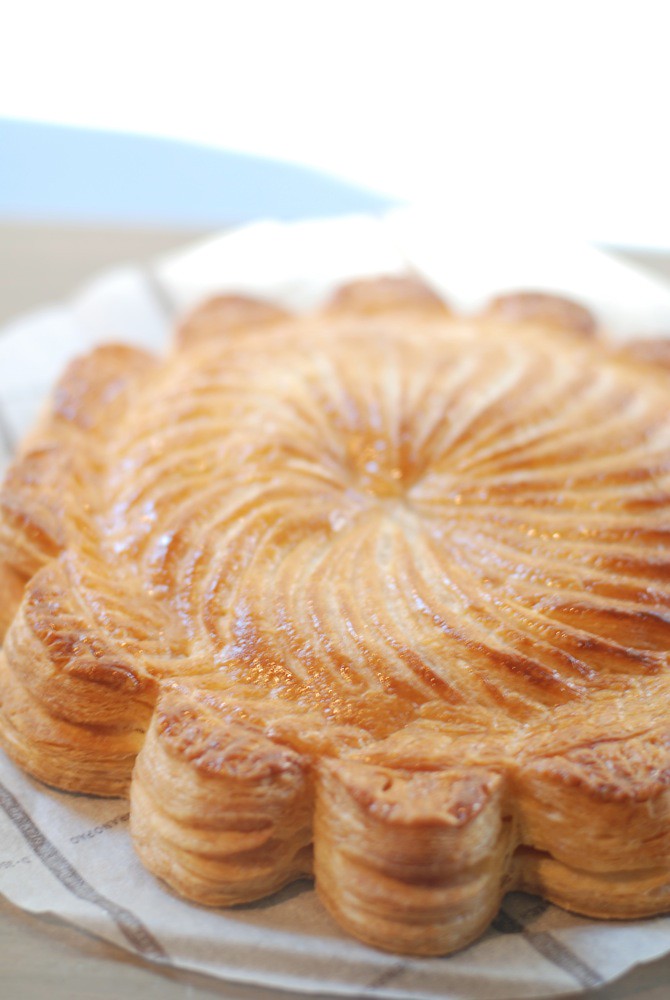
We had our last class on puff pastry reserved for making pithiviers and sacristains. Both were very unfamiliar names to me, but since I have enjoyed learning how to make our own puff pastry at school, I was excited to see what these pastries were.

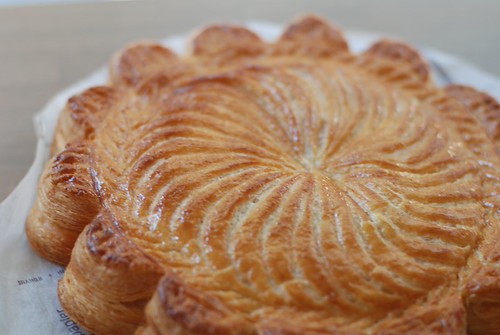
It turns out the pithivier is just an everyday version of the galette des rois I made this past January. Instead of filling our pithivier with an almond pastry cream, the chef just did an almond cream. I think I prefer the extra indulgence from mixing almond cream with pastry cream in my own version, and the chef mentioned in demonstration that most bakeries do flavour their almond cream with a bit of pastry cream to make a frangipane sort of filling. After seeing it in demonstration, the chef reminded us that we’ll be seeing lots of these cakes around Epiphany in January – I can’t wait to try some out!
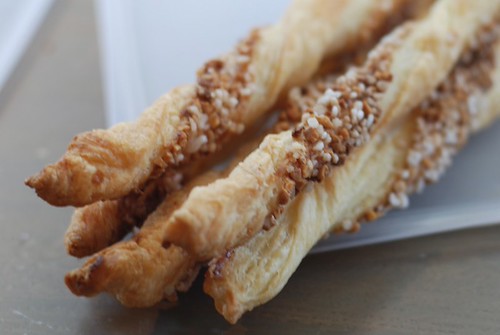
With the leftover dough, we made sacristains – a really fancy name for French cinnamon straws. French cinnamon straws use chopped almonds and large pearl sugars, which give them a really nice crunch, but overall, the flavour is a bit lacking. I would’ve loved to see the chef brush on butter and sprinkle with regular sugar and cinnamon, but that would’ve been too crassly North American.
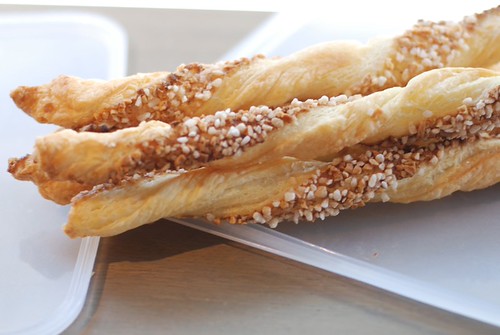

Even though I made sure to put a lot of pearl sugar, it still wasn’t the same thing…

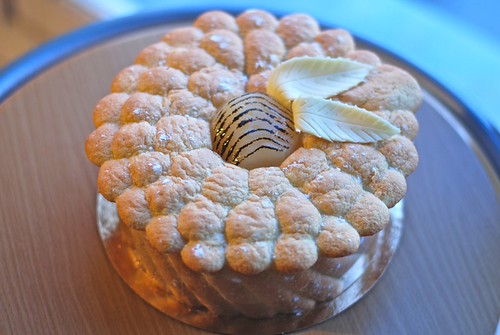
We had the practical class at 8:30 in the morning, and the chef overseeing our work was the chef responsible for superior pastry. I actually learned quite a bit from him, as he helpfully pointed out why my dough was a little spotted when he walked by. In demo the chef had been adamant about not having hot butter in our détrempe dough, and I had taken it to heart a bit too much that my butter was on the colder side. Therefore, when met with cold water, the butter seized up a bit, creating little spots in my dough. The chef gave quite a few helpful pointers that day. Combined with a few tips I had heard from a friend who had completed the class the day before, I was very pleased when my pithivier came out of the oven looking puffy and flaky, with a nice little dome in the middle.
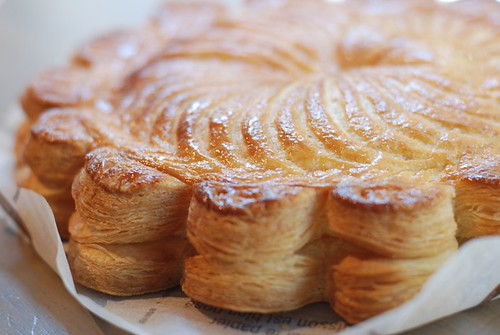
Even though the chef had warned me that my pithivier may not come out nicely because I rolled the pastry out in the wrong direction, he seemed to have forgotten about it all when he came by to grade my pithivier. He had only nice things to say about mine and my friend’s, and when I asked him about the edges puffing up as two separate sheets of pastry, he said that was perfect – exactly what he would look for to be able to tell that it’s a well-made puff pastry. Phew!
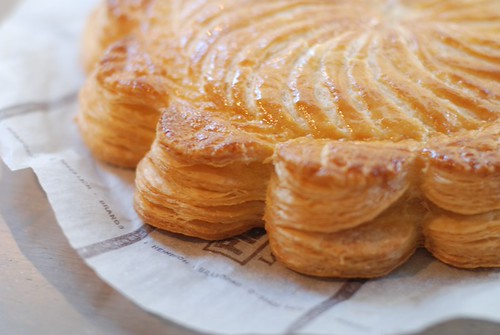
We had a bit of a break, so I took my pithivier out for a spin to Starbucks to get some decent pictures of it, before leaving it on the communal sampling table at school. We all devoured our own sacristains, though!
My day continued on with another demo and a practical – more to come, as the day progressively got worse (of course), and only a separate blog post will do the tragedy justice.
{ 2 comments }

Pear Charlotte


Pear Charlotte

It’s been a while, oops! A week and a half ago, on the day that Terence left, I made the pear charlotte. It is something completely new to me, and I’ve decided it’s a cake I definitely enjoy eating, but not making.

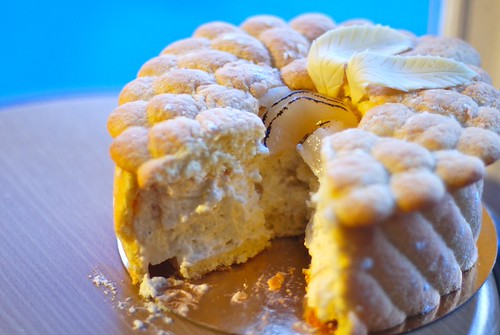
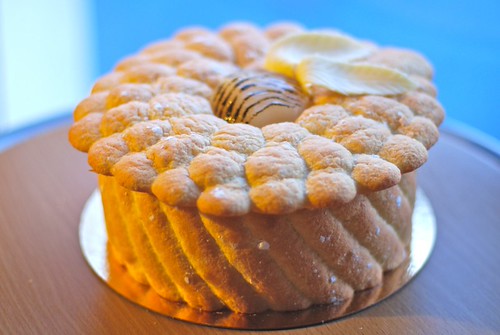
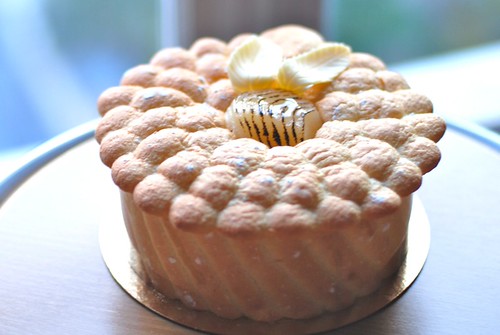
The pear charlotte is basically piped ladyfingers arranged beautifully into a round “box”, filled with pear mousse inside. It is consumed cold, and is a delightfully light dessert. The ladyfingers are airy and lightly sweetened, and the fruity mousse is anything but rich. It’s very different from the typical desserts we’ve made, and I really appreciated the change.


The “big mama” bulb at the side is the result of an accidental run-in with the top of my obnoxious piping bag. Oops!

For demo, we had Mr. Silence chef. He is good at what he does, but his demos are really very quiet without a lot of interesting information. Therefore most of the time people are a little distracted while he’s doing his thing up at the front of the classroom.

We had the nice old man chef for this practical. He told us to pipe the ladyfingers sideways for a prettier look. I’m not sure I like the ladyfingers on a slant – it doesn’t seem to agree with the symmetrical “lid” of the cake at the top. However, as one of our translators once said, it’s the rule of closeness when it comes to chefs’ instructions. Whichever chef is closer to you wins the debate. So I piped my ladyfingers on a slant. Except, I’m not without disaster these days, and so with my not-so-great folding skills with egg whites and dry ingredients, my batter was getting pretty runny. The chef looked aghast when he saw my work. The whole time the ladyfingers were baking, I was really worried about having something that had no definition when the pieces came out of the oven. I wanted to just pack everything up and leave before being confronted with the end result.

Luckily, things came out OK. Other than a couple of small gaps between the ladyfingers because I piped them a little too far away from one another, it wasn’t a complete disaster. The pear mousse was delicious and not too difficult to whip up (literally). Once filled, I was happy enough with the end result. By then though, I was also emotionally drained from the large range of emotions I had just gone through in 2.5 hours, from worry to denial to stress to relief.

The chef was in a pretty good mood. He fed us the rest of the pear halves because he didn’t want to put them away, and he also let us torch the pear slices on top. It was the first time I had tried torching, and it was a lot of fun! My pear slices weren’t spread open enough, though, so I think the whole decoration with the leaves and the pear half made the top of my cake look like a golden snitch from Harry Potter. The chef agreed it wasn’t exactly what he had in mind, but whatever, I made a snitch.

It’s easy to eat a lot of this cake because it’s so light! The next day I dug out all the mousse and we just ate the ladyfingers – harmless enough with egg whites and no fats. I loved eating the whole cake with a spoon, though (definitely good as a wallowing food too), but I’m still on the fence if I’d like to attempt this recipe again. Maybe when I get better at folding egg whites, I’ll give it another go :)


Brioche


Brioche Nanterre

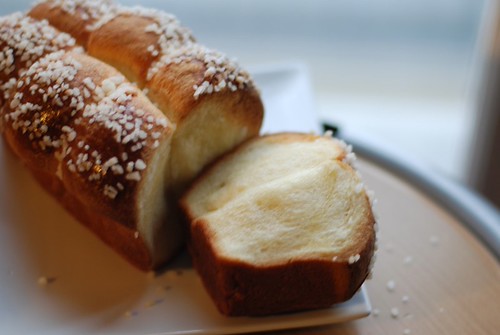
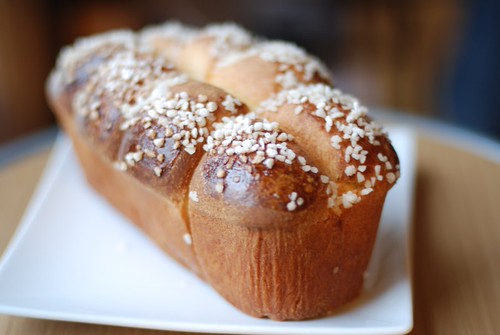
After all that kneading at the end of our delicious croissants practical class, we put the dough to good use for some brioche. We watched the demonstration chef make all types of brioche variations (how many different ways can you shape buttered bread dough?) and the best part of the class was that he was in a fantastic mood. Our typically stern chef who can send my nerves into a tizzy with one sardonic look was all smiles and smirks. He shared jokes and stories with the class as he worked away merrily, and I wouldn’t have been surprised if he burst into song at any point. Since he taught at Le Cordon Bleu Ottawa prior to coming back to France, he was wearing a chef jacket adorned with a red maple leaf at the neck that we had never seen before. Towards the end of class, chef passed the loaf of brioche nanterre around for us to smell the sweet and light yeasty aromas, and someone took a piece off and ate it. When the loaf made it back to the chef and he tried to piece the two ends back together for his display platter, he noticed that the two pieces obviously didn’t fit together.

Normally we would’ve gotten a very stern talking-to. He lectured for probably a minute on proper etiquette and respect for other students and for the chef, and then went right back to his smiling self. Amazing!

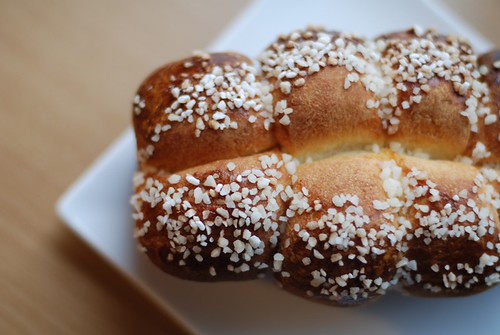
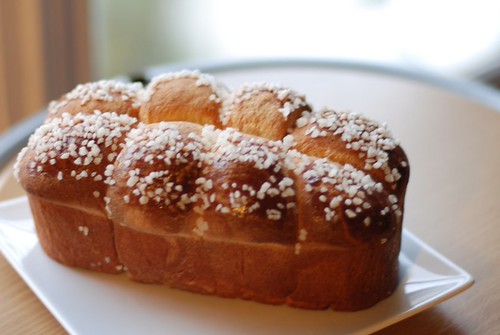
That same afternoon, we had our practical class to make our brioche. We made a large brioche à tête, two small brioche(s?) à tête, and a nanterre loaf which is basically 6 little balls of dough squished together to rise. With the leftover dough, we rolled out raisin rolls, which was a bit sad for me. I wished we could’ve rolled out the dough, brushed on butter, and sprinkled with cinnamon sugar to make a little taste of home. Alas, it was the French way: pastry cream and lots of yellow sultana raisins. Bah.


Although I kept my fingers crossed to have the demo chef so I could witness his indestructibly happy bonheur in person and not be frightened by him for once, we got the overly angry/happy chef. He wasn’t really into watching us make these breads, though, as he was busy shaping his own dough into random shapes and baking them off. Thanks to the previous class, I had some good tips on making sure my little brioche à tête worked out well. The little breads all rose well with the heads in the middle, but at the last moment, I think with all that moving in and out of the proofer, and the pastry brushes attacking constantly with egg-wash, they all fell a little bit to the side.

The loaf rose well, and I squished in 8 balls of dough instead of the usual 6, because the pan size was a bit longer than usual. It was interesting to try everybody’s bread at the end though – one girl in my class ended up with a super light and airy brioche that I just loved. Comparatively, mine tasted much denser. Since I wasn’t a big fan of this bread anyway (if you had to squish half a pound of butter, by hand, into this dough you wouldn’t be either), I left most of my brioche at school. I brought home two raisin breads that were promptly devoured by Alex and Terence (no photo opportunity existed for those little discs), and the loaf for making French toast later in the week.

I’m glad to have kneaded this dough by hand to know how to do it, but I doubt I will be busting out this recipe on a regular basis any time soon. It is just too heavy for my liking, and I think I’d only make it for special occasions, or maybe to test out a cinnamon roll with this dough. Also, I may try it again to see if I can get that lovely airiness that my classmate achieved!

{ 3 comments }