cordon bleu

Onwards and Upwards


Palets aux Raisins & Bâtons de Maréchaux

Classes were lulling a bit last week in terms of inspirational and delicious recipes. It was also a busy week because I was the assistant, so I didn’t really have time to blog when I was too occupied with stressful thoughts like where to find pear alcohol and chopped almonds in the pantry.

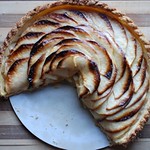
We made a caramelized pear tart with a sweet pastry on a sweltering hot day, and it was so warm in the kitchen that the chef told us to roll out our dough completely between two sheets of parchment. He was a new chef to the school, and I laughed inside about what the other chefs would say/do if I whipped out two sheets of parchment for rolling dough during the final exam.
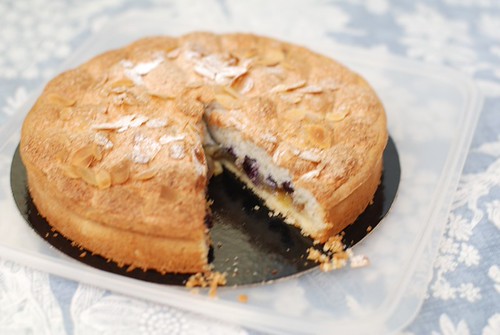
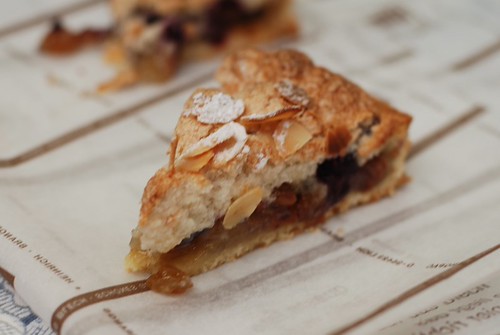
  

The tart consisted of too many things going on at once that I didn’t enjoy it very much. It is a nice sweet pastry filled with cooked canned pears dotted with raisins and canned black currants. Then we made a dacquoise-esque egg white and almond mixture to pipe on top so it had a cake-like crust on top, and then sprinkled with almonds and icing sugar. I think it’s a tart with an identity crisis – is it a cake? a tart? a fruit thing? Plus, raisins are definitely on my list of offensive foods. I can only take them occasionally in an oatmeal raisin cookie, all other forms are denied. So this tart really had no chance, poor thing.

During the practical, the new chef who speaks only French was very abusive with my name – he would call me for the most random things, and the way he called my name made me really jumpy. Take, for example, him showing up next to me when my dough was flash-freezing. I was measuring out dry ingredients for the next step. He came by, said in French three times because I couldn’t understand him right away, that I shouldn’t be doing this because my dough wasn’t moulded into the tart ring yet. By the third time, I was getting pretty nervous – what the hell could I possibly be doing wrong that he needed to emphasize something so many times? When it finally dawned on me, he had moved on, I had lost a few brain cells, but was a little indignant that I didn’t get a chance to reply. So then I had to keep an eye out for him to come back around to me, so I could rebut, a few minutes too late, that I had nothing else to do…so the logical thing was to prepare the ingredients for my next step even though I wasn’t quite there yet.

It was exhausting, this constant back-and-forth, and needing to stand up for self because he wasn’t quite on board with me but knew I understood just enough French so he could continue to stalk me. At one point, thank goodness I was quick enough, the chef called out my name urgently as I went to the sink to drop off my whisk. I ran back to him, thinking oh no, my egg whites weren’t done, I misunderstood him! He held up my pear-stirring spatula and asked why I didn’t take it along to wash. I was quick enough to point to the myriad of clean slotted spoons next to me to say that’s what I use to fold my egg whites. I didn’t have the language skills to say, can you please not be so concerned about my spoon, but hey how about let’s talk about my technique here?

In all fairness, the chef was a nice man, and definitely friendlier than some of the other chefs. However, his obsession with me that day made it really hard for me to concentrate and feel confident about what I was doing. That, combined with the fact that I wasn’t even looking forward to the end product, made for a really trying practical class. I couldn’t wait to be done, and had a drink at the bar by the school before I came home because it really was that kind of a day.
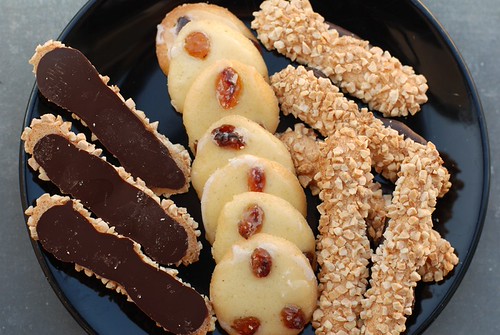
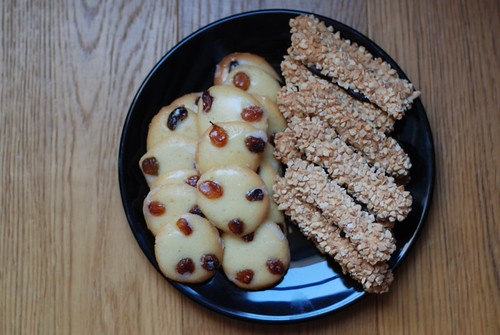
Moving on to the “marshalls’ batons” and raisin cookies…it was a bit of a weird class. It was a class meant for “dry petit fours”, but it is really randomly placed in the curriculum as it has nothing in common with what we’ve been doing (a lot of tarts and cakes if you haven’t noticed). We got to practice whisking egg whites again, but basically I think this class is kind of known as a “write-off” class to many people at the school.

The demonstration for this class was fun, though. On top of the batons and cookies, we saw the rolled cigarette-like cookies, and macarons made by the chef. The macaron technique was carefully explained, since we had the young chef who goes through a lot of detail. The class went into overtime, but we all enjoyed the lesson so much that it didn’t even feel like a really long class.

For the practical, we had a chef who I think is part-time at the school. He is the epitome of “Don’t judge a book by its cover”. He was friendly, helpful, and super calm during the class. He didn’t hurry us, he stopped by and pointed out where things weren’t good, he encouraged, and he even helped me put things away to alleviate the assistant duties. He wasn’t too jolly that he was joking with us, but he was easy to work with.

Ha, not so much at the end. When he marked the class, he gave everyone 3’s (out of 5) and I think there was one person who got 3.5, maybe two. He wasn’t hiding the grading sheet, so I kept craning my neck to read it. I was so surprised that the grading was so harsh for someone who didn’t criticize too much and was generally calm and in a good mood. I think the French girl in my class was really outraged, because she stayed after class and asked the chef about the marks, and received a very, very long lecture instead. I stuck around to listen to part of it, but zoned out and made my escape when the lecture went over 5 minutes and my eyes started glazing over.

The cookies were good little snacks – I ate the batons sprinkled with almonds and dipped in tempered chocolate, and Alex devoured the raisin cookies. The batons were baked to be crunchy on the outside and chewy meringue-like on the inside, and since it’s doused with nuts and chocolate, it tastes primarily of the dressings rather than the cookie itself. The cookies are not my favourite type of cookie dough feel – they’re soft and cakey, especially since they didn’t spread very much on the parchment. However, they are still sugary and dipped in glaze, so Alex gladly ate them all anyway.

From here, it’s onwards and upwards, as we venture into more exciting recipes! We’re making little orange and chocolate tartlets next – the best flavours for tarts, in my opinion. Then we’ll be off to the land of croissants and brioches – yum!
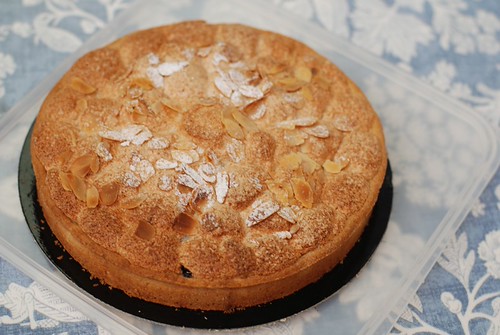

One last photo of the pear tart while I’ve got it here…
{ 2 comments }

Left at School…


Gateau Basque

For the first time ever, I’ve left a dessert at school!

We had a lesson on the Gateau Basque and Diplomat’s Pudding, and the demonstration felt long and drawn out with a lot of silences. These desserts had both fairly uncomplicated recipes, but since the chef had to make enough to feed 40-50 people, he really couldn’t fill the time with a lot of comments as he moulded five tart rings and filled ramekins of all sizes for the pudding.

I don’t really want to talk about that pudding, because it is still giving me nightmares. Diplomat’s Pudding is like a bread-and-butter pudding from the UK, but without the nicely sliced bread and instead uses chopped-up day-old brioche. Add some green candied fruits and raisins, douse with custard, bake, and drizzle with more crème anglaise, and there you have it – something that mildly resembles what comes out of you after a hard night’s drinking. Yeah. It tasted OK, but I have never been a fan of soggy bread, or crème anglaise, or this type of baked custard (nothing like crème caramel, in case you’re wondering). So although I ate it, this pudding is not something I would ever serve at home, in a restaurant, or wherever I get to decide what to bake.

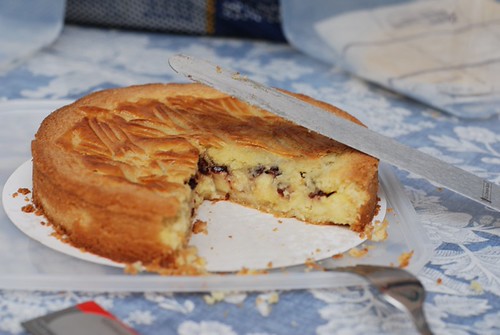
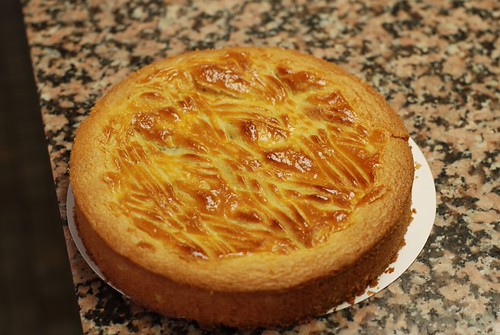
Gateau Basque consists of pastry that’s not as firm as a tart shell, buttery-er and creamier than a cookie dough, and it is filled with pastry cream and preserved fruit – typically somewhat candied cherries. The name suggests that it comes from the south of France and north of Spain, the Basque region, and according to one of my favourite blogs, pastry studio, the cake originated in the 17th century in Cambo (which is now part of southern France). Very interesting little fact that I discovered: Gateaux Basque started out as little pig-shaped cakes, but have evolved over time to become a round cake with local jams and custard filling. Typically, the black cherries used are from the little village of Itxassou near Saint-Jean-Pied-de-Port.


Inside the buttery “cake”

In class this week, I am the assistant. This means I go into the kitchen half an hour earlier, and set out all the ingredients we’re going to need on the worktop before everyone else gets there. It is a stressful undertaking because so far, the chefs have all yelled at assistants to start putting ingredients away halfway through class as people are scrambling around already, pressed for time. Furthermore, if you forget to set out certain ingredients that are just so obvious, like powdered sugar, the wrath from the chefs and the anxious glares from your classmates can probably send a semi-sane person like me directly into a nervous breakdown. Yes, I was stressed out before class today, and I couldn’t even eat lunch before I got into the kitchen. My co-assistant missed the demonstration, so I was not counting on her to be there, and sure enough, she was absent today. Luckily a couple of girls helped me out, and we scrambled between the upstairs kitchen (bigger, better stocked) and the walk-in fridges in the basement. I got to work the dumbwaiter too, which was kind of fun.

Once class began, and the dough for this “cake” came together, I was slightly shocked. I saw in demo how soft and creamy it looked, but being the person who was doing the creaming by hand was a completely different sensation altogether. This cake batter/dough felt like a cookie dough that didn’t have enough flour added yet. I was a little weirded out as I pushed the dough with the heel of my right hand – it just felt like I was melting butter with the heat from my right palm. Finally I gave up, scraped off all that gooey dough off my hand, and declared it “done”. It wasn’t. There were a few visible chunks of butter, but what did I know then?

When it came time to roll the dough out, I made a few elementary mistakes at first, with the bottom layer. I mean, seriously, imagine trying to roll out a chocolate chip cookie dough that you’ve only added 2/3 of the flour to. Yeah, tell me about it. The chef came by and showed me how the rolling should be done, but I broke the pastry anyway when I put it into the mould. Hasty patching was done, but the dough was so freaking soft by then that I didn’t dare touch it too much (it just felt like it was constantly melting under touch). However, when I got to the top layer, I was much more confident, and I think I did a much better job of keeping my pastry mobile, pliable, and non-crackable (if that’s a suitable and understandable expression). By then, though, I was running a little behind because I had taken some time out to put away the icing sugar, baking powder, and sugar bowls. I decorated the top quickly and threw it into the oven.


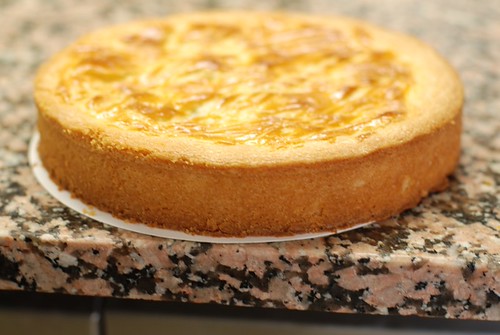
This is the nice edge…

Later, the chef critiqued our end product, and mine clearly showed that my dough wasn’t worked enough (the butter chunks created small holes/thinning parts of the pastry as the butter melted away during baking). I also didn’t cut the cake out of the mould cleanly, so a little bit of the edge was missing…and of course the chef found that edge right away. Overall, though, it wasn’t the worst looking thing I could’ve made, but I wasn’t proud of it either. The chef recommended that we rush like crazy in the beginning so that we have more time to decorate at the end, because customers (and critiquing chefs, I believe) buy with their eyes. After this lesson, I think I’m definitely going to start picking up my pace. I’m typically not the last person to finish my pastries, but I’m also at least ten minutes away from the earliest finishers in my class. We’ll see about that, though – next class involves whisking meringues again, ugh.

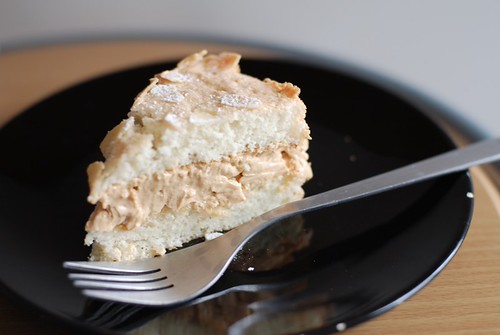
I’m not super in love with the cake, because it is quite buttery and the addition of pastry cream makes it a little too rich for my liking. However, it is definitely a superb dessert to try if you love the taste of buttery pastries. Since we have devoured that dacquoise completely, I thought it was best for us if this one didn’t come home. The effort to be healthy was half-assed, though, as I picked up a dozen chouquettes from the bakery near the school on my way home…oops!


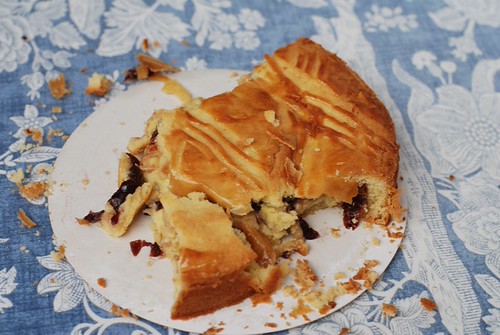
My friend’s cake, devoured by other students (and us) on the “leftovers” table at school

Working in the Kitchen


Dacquoise with praline buttercream

I’m going to try my very best to describe what it feels like to be in a Cordon Bleu kitchen. This is going to be totally from my perspective, so although all the below feelings would likely be shared amongst most students, please keep in mind not everyone is a nut case like me.

I start getting ready to go to school two and a half hours before. It’s a little panicky for me every time as I triple-check what I need to bring that day, and try to recall my locker the way I left it. My worst nightmare is showing up at school without a piece of my uniform, be it the cap, the necktie, or the trousers. A student without a complete uniform is not allowed to enter into the classroom.

[Interesting side-story: I lent my extra pair of trousers to a girl in the locker room this morning so she could go to her class. I had no idea what her name was when I offered her my trousers, but I immediately felt compelled to do something because she was tugging at one of my deepest and darkest fears here. It turns out that she is the owner of the blog Jessica’s Dinner Party – a blog I read enviously from my salmon-coloured cubicle in Markham only last December!]

I leave our apartment about an hour and a half before class. The Métro ride is about 45 to 50 minutes door-to-door, with one transfer in between. I get to school, change into my outfit, grab my hair into a twist at my neck, put on the cafeteria-lady-esque hairnet and my cap, tie the very large apron around my waist a couple of times, slot in the tea towel in the apron waistband, and begin packing my equipment bag for the kitchen. From the demonstration, we can see what the chefs use to prepare the pastries, so we are supposed to write this down and pack accordingly. The digital scale and measuring bowls are regulars, as are the super-strong magnets that hold down our parchment paper. Then there may be a knife or two, piping tips, and the trusty pastry scraper. I throw all of this together, and here’s the best part: we stand in front of the kitchen 20-30 minutes before class even begins.

I’m not sure why people started doing this, but as peer pressure works its magic, I too am compelled to arrive at school super early, get changed, and just stand in hallways.

We stand in the hallway and make small talk, observing the class assistants who set up the ingredients on the marble worktop. Sometimes we might hear the chef already in the kitchen and try to guess who it may be. Mostly, I feel fidgety and anxious.

See, the teaching method at Le Cordon Bleu really values tradition above all else. Traditional recipes, traditional baking methods, and traditional “kitchen hierarchies” in order to learn. The chefs are very particular about the steps involved to make the products, and they are all non-too-hesitant to resort to impatient yelling if students are not doing what they deem is 100% correct. That’s where the kitchen hierarchy comes in. Chef rules all in the kitchen, and every comment should have a respectful and prompt reply of “Oui chef!” On the first day of school, the principal made a point to tell us that if our chefs call us putain in the kitchen, he doesn’t mean it – it’s just the way they yell at you so you learn. As a Canadian who was told off by my high school French teacher about the difference between poutine and putain, I was thoroughly appalled.

When the chef is ready to begin class, usually about 5 minutes before the scheduled time, he will invite us into the kitchen. Then and only then are we allowed to enter into the kitchen, find a spot along the marble worktop, and set up our equipment.

Our practical classes are scheduled to be about 3 hours, but usually there’s no definite end time, and classes last for about 2.5 hours instead. As mentioned above, the chefs are keen on steps – but they are also very time-conscious and will start reminding us of timing as soon as we begin weighing out our ingredients. “Allez allez allez!” is probably one of their favourites, along with an “expectation-management” prologue at the beginning for when they expect everything to be in the oven.

For those reasons, my recipes that I bring into class are full of ridiculous details like, now weigh out flour and baking soda. Weigh water directly into pot. Put the bowl down and go grab a cooling rack. I basically try to simulate the most efficient way to accomplish all the tasks in the right order, and actually write them out in my notes to remind myself. For the record, I don’t tend to look at my recipe that often as I work, but the act of writing steps out in such ludicrous detail definitely helps me in class.

  
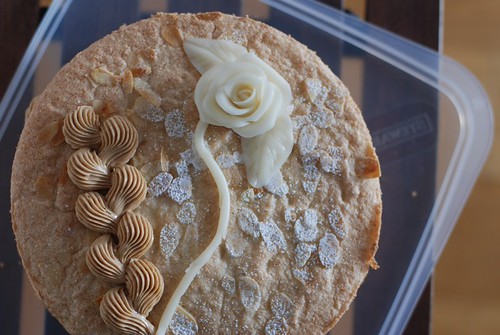
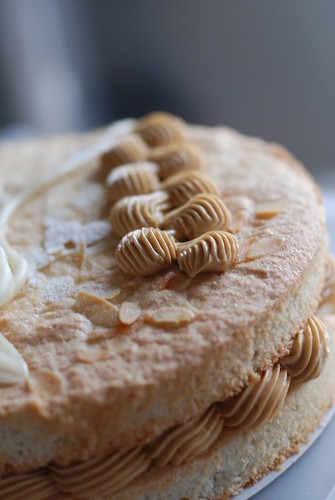
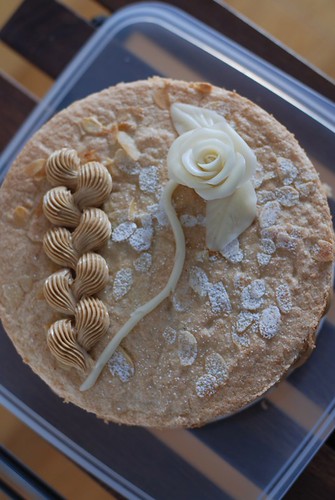
Piping after WAY too much whisking. Look closely, you can see in the rosettes where my arm started wobbling from all that work. P.S. I realized afterwards the leaves don’t look right, but too late. My rose is “special”.

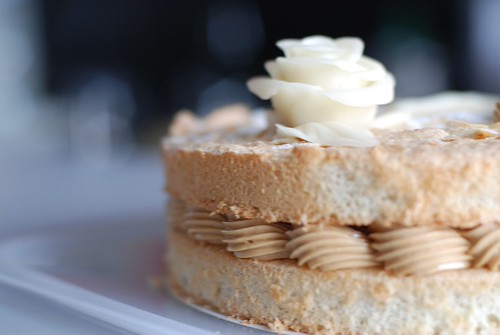
So today in class, we made dacquoise cakes. Dacquoise is a nutty meringue cake (with a little bit of flour) that is super light. I had never been a big fan before, and I didn’t quite like the one the chef made in demo either. I thought it was kind of dry and I’m not really a fan of dry crumbly cakes. However, the products that have come out of the practical classrooms under different chefs’ supervision have been much nicer – light and just the right balance between dry and moist.

The chef arrived in a grumpy mood, and it was the chef who really liked me last time. I think he is not really a morning person, maybe, because he was impatient and critical today. He began the class with lots of stern warnings on what not to do, all rattled off in French loudly and grouchily. The Chinese contingent and the non-French-speakers in my corner all turned to me with nervous expressions for a translation – it was going to be a stressful morning. We began by whisking the egg whites into meringue, BY HAND. My friend unfortunately added her sugar a little too early, so she had to throw out her first batch and re-whisk. That took a good twenty minutes, or what felt like an eternity, before the meringues started forming.

Then we were supposed to fold in the ground almonds…except, now that I think about it, the demo chef didn’t say much about this step. He just mixed the stuff in. Not a good demo chef exactly, eh? So there we were, folding in our dry ingredients…except quite a few people started beating the crap out of their meringue while mixing in the dry ingredients, and the chef lost it on them.

I folded with trepidation, which worked against me, because then it took longer for me to get everything evenly distributed, and my meringue started deflating a little bit. When I handed it to the chef to put into the oven, he looked at my meringues with disdain and shook his head. See, I told you he was not in a good mood.

Then we whisked egg yolks (7 of them), cooked sugar and water and tested doneness with our fingers in 116-degree (Celsius) boiling sugar, and whisked FOR ANOTHER ETERNITY to make the buttercream. I think that was a good solid 30 minutes of continuous whisking. I wish I were ambidextrous, because at this rate, my already-slightly-bigger right arm is going to get a lot more muscular very quickly. This is totally the “traditional method” thing again – everything is to be done by hand so we can feel. Machines will whip past the different stages too quickly for us to notice the process, or to realize we’ve done something a little too much. I think it’s really neat that we do this, but I am so looking forward to the days when I will make the recipes at home, with my beloved KitchenAid. Anyway, we had to whisk the boiling hot sugar until they reached room temperature, then slowly whisk in more than 300g of butter and praline, little bit at a time, to make the buttercream. I think my arm is in the buttercream, too – it’s definitely fallen off at some point.

After all that whisking, we had to pipe the buttercream onto the cakes. I love the delicate design, and the fact that the cakes don’t need to be smothered in buttercream here. The only problem is, my arms do that really embarrassing thing where they shake uncontrollably if I have exerted much more force than usual. So with very unsteady arms, I set out to pipe my rosettes.


I think I can get them to look more uniform – on a day when my arm is still correctly attached to my body.

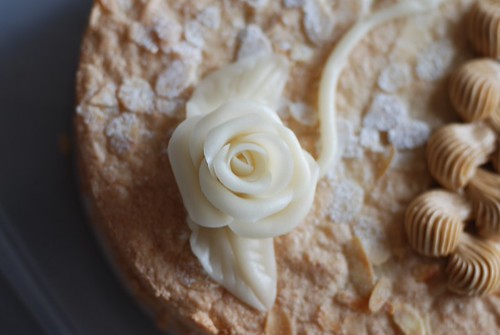
We also had to make a marzipan rose to sit on top of the cakes, which was kind of fun. Normally I enjoy playing with fondant and stuff like this to make stuff, and the chef showed us some great techniques for making the petals look delicate. However, I was also in a bit of a rush as half of the class had finished by then and I didn’t want to be the last person there, getting the full wrath from the chef for being late.


My rose – it’s a little bit like a cabbage, too. Oh well.

When the chef inspected my work, he pointed out that the rosettes were inconsistent – some nice bits, some not-so-great. I tried to explain that I didn’t quite know how to connect the beginning to the end, but he shushed me by telling me “c’est moi qui parle maintenant!” so I had no chance. He was happy with my rose though, and you can tell he is a nice man who doesn’t want to be hated for his outbursts in the kitchen, because he was making amends with everyone and doling out hugs and encouraging words to those he yelled at most.

I brought mine home, and we’ve had about a quarter already today – yikes. We desperately need visitors soon to help us eat all this stuff!! Also, I can have a visitor per session to sit in on a class – so if you want to see what it feels like to be in a Cordon Bleu classroom, come to Paris!

{ 8 comments }