cordon bleu

Guest Chefs and Theory Classes

  
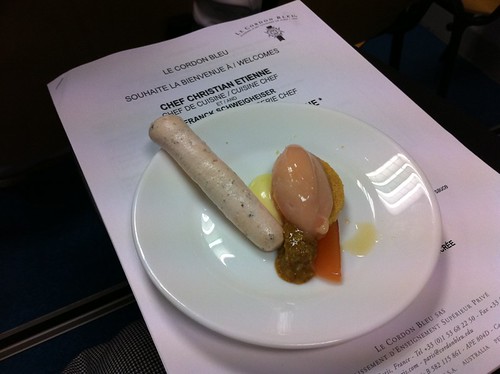
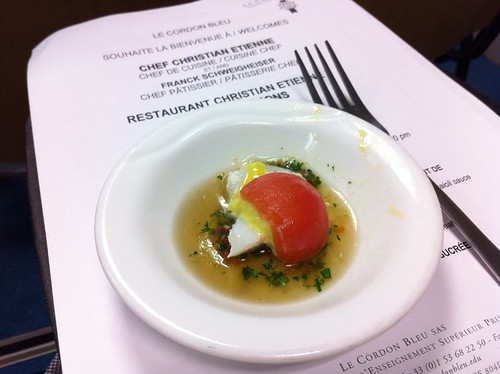
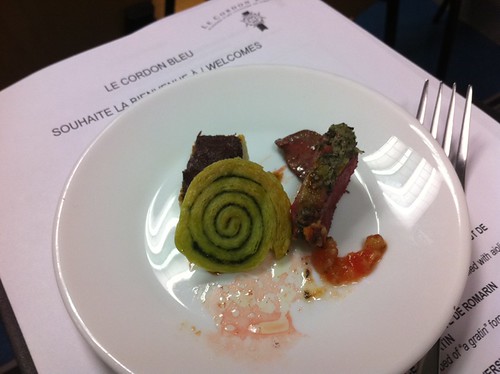
Cod & Squab sampler dishes from the guest chef

This past week we had the first guest chef event of the school year, and our first “theory class”. Let me just say, I love theory classes. We spent two hours this time talking about butter and sugar. TWO HOURS! BUTTER! SUGAR! I was in heaven. Even more luckily, we had the young chef who’s definitely cut out for this type of thing, and I had just a great time learning about fat content in butter, sugar processing methods, etc. Sacrilegious discovery: molasses is not used in baking or cooking here (I knew that), but rather, is fed to cows as an unwanted by-product in sugar processing. What?! I think the chef could see my face looking slightly crushed upon hearing this, and I swear he almost smirked.

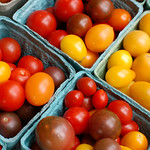
The guest chef event was also really neat. The chef was from a Michelin-starred restaurant in Avignon, who also happens to be a good friend of a cuisine chef here at the school. His specialty is truffles and tomatoes, and he showed us many different types of tomatoes. Apparently at the tomato board of the EU (or something to that effect) where he is a prominent member, there are over 2,500 types of seeds available for tomatoes. Crazy! He handed out his recipes and set to work with his pastry chef at the same time, plus lots of help from kitchen assistants and chefs at the school. It was chaotic up front at the kitchen, with lots of action in all directions and the translator rattling off to stay with the two chefs. My friend and I attended, but decided not to take notes, which was a really good idea. There was no way I could’ve captured everything and enjoyed the session at the same time.

At the end, just when it looks like the chef has only cooked enough for 4 people, the assistants brought out pre-made portions enough for the whole demonstration room! So we all got little samplers of the three dishes. This experience immediately moved future guest chef events up to “must-attend” events on my list. Free samples of different dishes from Michelin-starred restaurants? Sign me up, every time!


Dessert: shortbread biscuit topped with tomato sorbet, lemon-basil cream, mustard syrup, and a tomato meringue. Doesn’t sound too dessert-like, but it was perfectly light, sweet, and delicious. I wanted all of the leftover sorbet. And maybe the meringue too.

{ 2 comments }

Little Madeleines


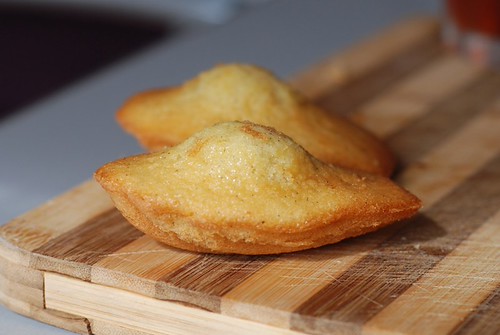
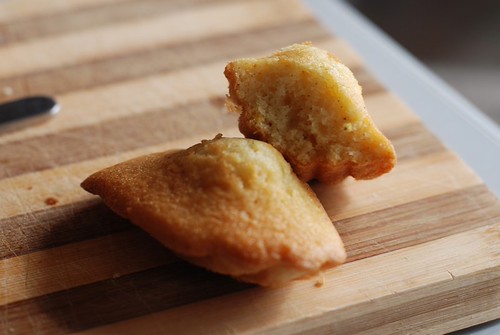
12 hours later: only 2 left to photograph

I had been looking forward to madeleines since the beginning of school, because it was the first dessert on the list that I actually really like. Although I had made them once before, I heard that the Cordon Bleu recipe makes unrivalled, amazing, light, fluffy tea cakes.

We had the young, strict chef for demonstration, and he shared lots of interesting information about madeleines. First of all, did you know we’ve been displaying them wrong in North America? The un-scalloped side should rise with a “head”, and since that’s the head, it is the right side up. The reason why the madeleines have a scalloped side is because the first time they were made, they were made in leftover shells from another dish, Coquille St-Jacques! If any bakery in France displays the scalloped side, you should be suspect that the cakes didn’t rise well, and that’s why they had to resort to showing the back.

I really enjoy the classes taught by this chef. I admit he’s easy on the eyes – there are simply girls fawning over him in my class (really awkward when they giggle around him). That’s not why I like him, though. He is incredibly organized when he is teaching, which makes note-taking a lot less stressful. He is also super knowledgeable about the genealogy of foods, and the “know-how” behind the things we do. For example, he explained why we add lemon zest at the end, how citrus and milk will cancel each other out and keep the pH balance in the batter, how lactic acids and baking powder develop and react during the resting period…etc. These are things that I would never have learned toying around in my own kitchen, and that’s why I am here today. I love learning about why baking is such a science, and this chef is amazing for that. He does it all while teaching us how to make the recipes, and somehow his classes still flow smoothly and I never feel overwhelmed.

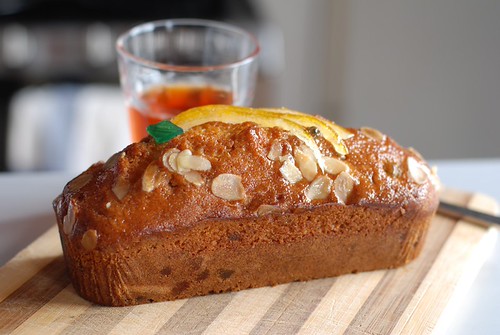
The other part of the class was on lemon pound cake, and fruit cake. This class was on the cakes that can be transported because they can be kept at room temperature. Working the batter to the right point so that they all rise beautifully was also something they shared in common. I can’t say I loved the fruit cake, but at least there weren’t any offensively-neon-coloured fruits to be integrated into the batter.

When we got to try the samples at the end of the demonstration, my friend and I were just starry-eyed, completely in love with the madeleines. They are just slightly caramelised/crispy on the outside, with the softest, pillowy cake in the middle. A hint of lemon makes them absolutely perfect. With this delicious treat in mind, it was very easy for me to be motivated and excited about the practical class later that afternoon.

  
The fruit cake from class – we ended up tasting some, and tossing the rest.

The practical class was really relaxed. Since my notes were well-organized, I felt more confident walking into the classroom, but of course, we had a different, easygoing chef who didn’t make me nervous. I wish we had the young chef so I could have had a chance to redeem myself after all the nervous wreckage last time with the apple tarts. My madeleines came out pretty, but they didn’t rise as high as a couple of other people’s madeleines. I think my batter didn’t rest long enough, and also got a bit too warm before going into the oven. Since I finished filling my mold first, my madeleines sat waiting by the oven for a good few minutes before they actually went in. Oh well. They still tasted delicious, but if I were to make these again at home, I would definitely give them a good amount of resting time before baking!


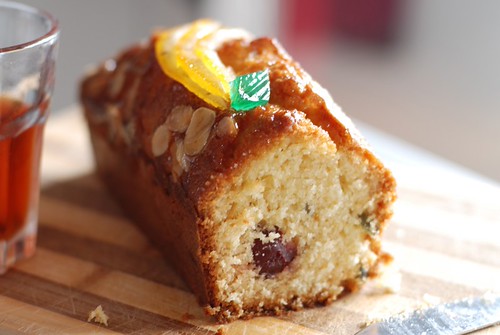
Inside the fluffy little madeleines.

I can’t remember if I have a good madeleine mold at home, but I will be scouring Paris for a good one to bring back with me. They’re the quintessential Parisian afternoon tea companion, and I look forward to making them often!

Flustered in the Kitchen


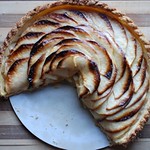
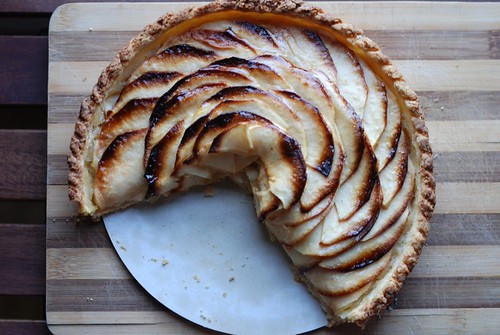
My tarte aux pommes didn’t even survive the night…

If I were to sum up the second demonstration & practical class in one word, it would be “chaotic”. It is worth noting that in the said chaos, I have misplaced my pastry brush (someone borrowed it and now it’s walked off), and my magnets that we use to hold down parchment paper. Really unimpressed with self, and the overall turnout of the second class.

The class was focused on pâte brisée sucrée, which is sweet short crust pastry. Normally I make a mean pie pastry (see examples here and here), but I had never tried it with an egg. During the practical, the chef demonstrated 3 different apple tarts using the same pastry, and I don’t know what exactly it was about the chef or the recipes, but the whole demonstration felt rushed and disorganized. I was flipping back and forth between recipes to jot down notes for different things, and although the chef did a great job demonstrating, he didn’t necessarily narrate his actions as well as some of the other chefs. He showed us how to mold the tart pastry (using just a ring, no bottoms!) twice, which was super helpful, but otherwise I felt overwhelmed with sentences, not tips for success.

I think most people felt confused and disorganized after the demonstration, because there were quite a few people discussing notes and asking clarifying questions afterwards. I had a long break before the practical class that same night, and I must admit, even though I filled my recipe with instructions, the words didn’t add to my confidence walking into the kitchen later that night.

We had the younger, more strict chef for our practical class. My heart sank a bit because I knew he expected order and confidence, and I really had neither to offer. This made me nervous from the beginning, and I just didn’t feel good about my task, which wasn’t a good sign. The workstation all of a sudden felt overcrowded. I weighed out my ingredients and began working. The dough was forming fine until I began over-thinking it – was I kneading too much? Flouring the surface too much? It began cracking and I felt sweat beads form as I hastily patted and patched…while looking nervously for the chef to see if he had helpful comments or stern looks to give. When he finally came by, I had rolled out the dough enough, and he told me that I didn’t flour enough. He scraped off dough from my rolling pin and marble surface to prove his point. Sigh…totally ironic.

Next came the peeling of apples. Since we can’t look amateurish while peeling, I was having a really hard time using the peeler “correctly”. I have stained my chef jacket, my apron, and my tea towel with apple juice from the peeling kerfuffle…that’s how hard it was for me to peel 5 apples. I started cooking my apple filling shortly after, but not before I looked around at my classmates and got even more flustered because they were all doing different things! Note to self: stop looking at other people. The chef is there to help you. Everyone else may just confuse you.

Molding the pastry into the ring mold turned out to be a lot easier than I thought, especially after the fuss the demonstration chef made about it. The only thing was that since my dough was under-floured, it was sticking on the parchment, and I didn’t dare move it around too much. I even crimped the edges nicely without too much trouble, except for the fact that the chef had to adjust my crimper for me since I have zero arm strength to work the little pincers. Strike three for not being able to use kitchen tools ;)
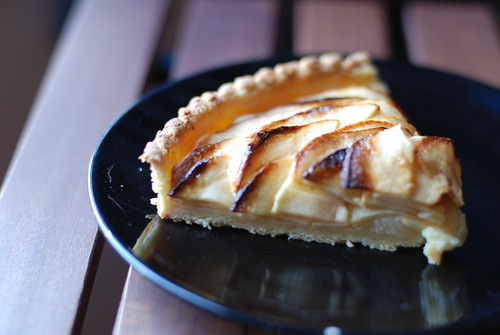

What a crimped edge looks like

Another step that I had anticipated would be difficult, but was easy, was arranging the apples on top. Again, the demonstration chef took great care to show and explain to us, but this part came quite naturally to me and I was done within minutes. It makes me a little annoyed because really, the lesson was about the pastry, and the lack of focus on the important details like rolling out the pastry, feeling it for the right consistency, made the practical that much more stressful for me. Meanwhile, things like crimping and arranging apples were so minor, and really not too hard, yet somehow they were exaggerated into focal points. It was all very messy.

I’m pleased to say my tarte aux pommes turned out well, and I loved the design on top. The chef singled me out though, to ask why I didn’t share a baking sheet. I had to admit sheepishly that I couldn’t move my crust at all, so I couldn’t make room for anyone else. It was quite embarrassing. We got some feedback from the chef at the end, and I lucked out with feedback from two chefs, because a cuisine chef happened to stop by at that moment. Both chefs looked happy with my work, and my chef told me it was very good for a first try. Unfortunately, I have developed a severe case of paranoia, so I think he was just telling me that to shut me up. I think he dislikes me. It’s all a conspiracy. He’s just so good at making me feel mortified about not being able to zest oranges or crimp pastry that I am certain he doesn’t like me. I’ve gone to the dark side of paranoia, I know.
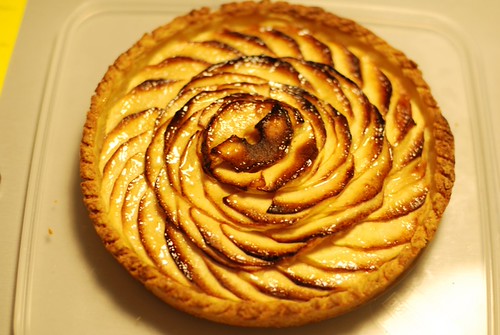
The tart tastes great. I love the pastry for it, and will definitely be practicing and applying it to other recipes from now on. It’s not as buttery-tasting as my fail-proof recipe, and has a bit more character than just butter and flour, which is nice. I just need to get it down pat so I can make it confidently, without all that cracking and sticking!
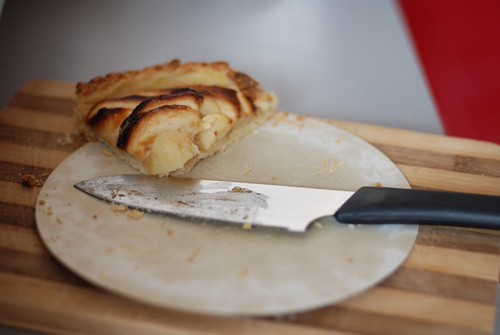

This was all that was left 12 hours after I brought it home. Alex is going to be very large soon.
{ 2 comments }